When Your Happiness Lives in Someone Else's Hands
When his silence ruins your morning and his text saves your day — that's not love running your life. That's fear. Here's what it actually costs you, and what becomes possible when you take it back.
HEART TALK
KC
3/28/2026
Your phone buzzes.
And before you've even looked at the screen, something in your body has already shifted — a small loosening, a breath you didn't know you were holding. It's him. He texted back. The knot in your stomach quietly untangles itself, and suddenly the day feels different. Better. Possible.
But when the hours pass and nothing comes — when the screen stays dark and your mind starts filling in the silence with explanations, with worries, with the quiet spiral of what did I do, is he okay, does he still — that's when you feel it most clearly.
Your happiness isn't yours anymore.
It lives somewhere outside you. In a notification. In his mood. In whether he reached out today or didn't. In the tone of a text message, the length of a reply, the presence or absence of something you've learned to need.
I want to talk about this — not to make you feel ashamed of it, but because I've lived it. And because the moment I understood what was actually happening, something finally became possible that hadn't been before.


💜 If this is the work you're in right now
The Free Resource Library has the tools I wish I'd had when I was first trying to understand this pattern in myself — including workbooks for rebuilding boundaries, reconnecting with yourself, and recognizing what healthy love actually looks like.
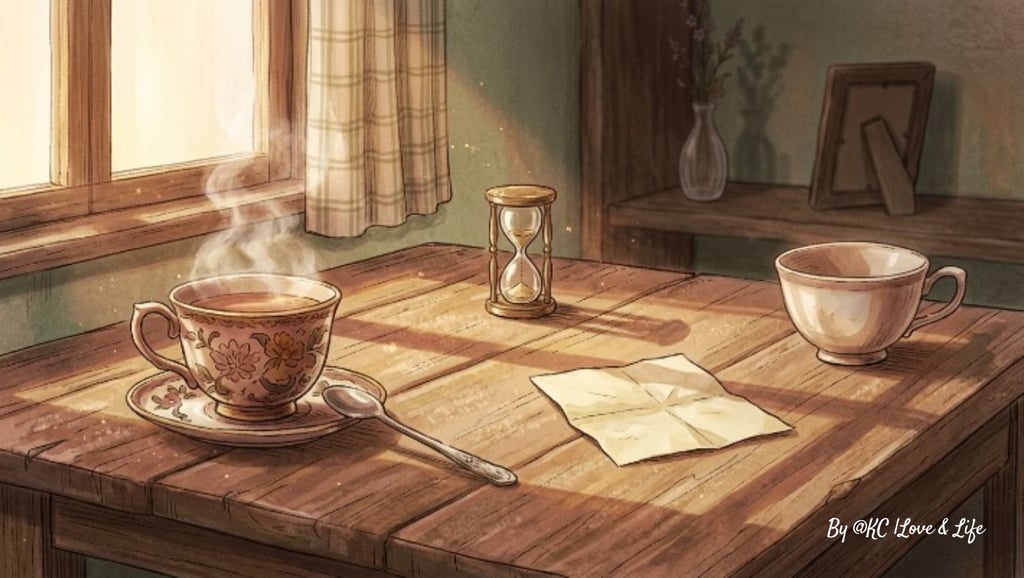

Love and Need Are Not the Same Thing
This is the distinction that changed everything for me.
There is a world of difference between loving someone and needing them to feel okay. And the difference isn't about how much you feel — it's about where you're feeling it from.
Love is a choice you make from solid ground. It says: I want you in my life because you add to it. It's generous. It has space in it. It can survive distance and disagreement and the ordinary friction of two people being real with each other.
Need is something else. It says: I need you in my life because without you, I'm not sure who I am. It's not generous — it can't afford to be. It's too afraid of losing what it's holding.
Love feels like standing on solid ground and reaching out your hand. Need feels like drowning and grabbing onto someone, pulling them toward you because you can't find the surface alone.
Emotional dependency isn't love. It's fear wearing love's clothes. And the hardest part of recognizing it isn't the recognition itself — it's the fact that from the inside, it feels exactly like love. The intensity feels like devotion. The anxiety feels like caring deeply. The constant monitoring feels like paying attention to someone who matters.
It takes a certain kind of honesty to see the difference. But once you do, you can't unsee it.
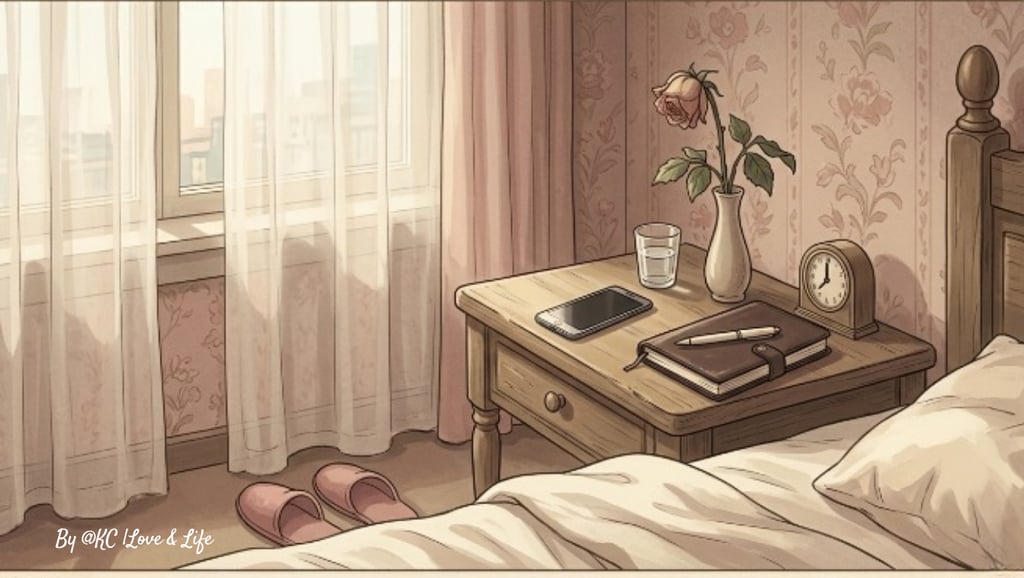
How You Know You're There
It shows up in small ways, mostly.
In the way your entire morning is colored by whether he texted when you woke up. In the way you've started reorganizing your schedule around his availability — canceling plans, saying no to things, keeping yourself free just in case. In the way his bad day has become your bad day, his stress your stress, his emotional state the weather you're all living inside.
In the way you've stopped doing things you used to love. Not dramatically — no single moment you can point to. Just gradually, the hobbies gathered dust and the friendships got a little quieter and the life that was entirely yours became something smaller, something that orbits around him.
In the way you ask — sometimes out loud, sometimes just inside yourself — are we okay? did I do something wrong? do you still want me? Not because anything specific has happened, but because the reassurance has become something you need the way you need water. Regularly. Or the anxiety starts.
In the way the thought of being alone — really alone, without someone to text, without the possibility of him — feels like something you'd rather stay in the wrong place to avoid.
This is what emotional dependency actually looks like. Not dramatic. Not obviously broken. Just a life that has quietly, incrementally, handed its center of gravity over to someone else.
Where It Comes From
Emotional dependency doesn't develop because you're weak. It doesn't mean you're broken or too much or fundamentally flawed in your capacity to love.
It develops because at some point — often long before this relationship, often long before you were old enough to understand what was happening — you learned something about love that wasn't true.
Maybe you learned that love is conditional. That attention has to be earned by being helpful, accommodating, easy to be around. That your needs were less important than keeping the peace, and that your worth was measured by how much someone else wanted you.
Maybe you were hurt before. Abandoned, or rejected, or betrayed by someone you trusted completely. And now you hold on tightly — not because this person has given you reason to, but because your nervous system remembers what it felt like to let go and lose everything.
Maybe you simply never learned that you're allowed to be whole on your own. That your happiness was ever your own responsibility to build.
Understanding this doesn't excuse the pattern. But it does make it possible to have compassion for yourself while you work to change it — and that compassion matters, because without it, shame just drives the same behavior underground.
What It Costs
Here's what I've come to understand about emotional dependency, having lived inside it and having slowly worked my way out:
It costs you in both directions.
It costs you because you're living in a state of low-level anxiety that never fully resolves. You're always monitoring, always reading the temperature of the room, always one unreturned text away from a spiral. You've made your peace contingent on variables you cannot control — someone else's feelings, their attention, their presence on any given day. That's an exhausting way to live.
And it costs the relationship. Because no one wants to be someone else's entire emotional foundation. That's not intimacy — it's pressure. It's a weight that makes people pull back even when they care, because there's something suffocating about being needed the way air is needed. Real connection requires two people who are choosing each other. Not two people where one is surviving because of the other.
The version of love emotional dependency creates isn't sustainable. It creates anxiety in you and distance in him, and the gap between what you need and what the relationship can hold just keeps widening.
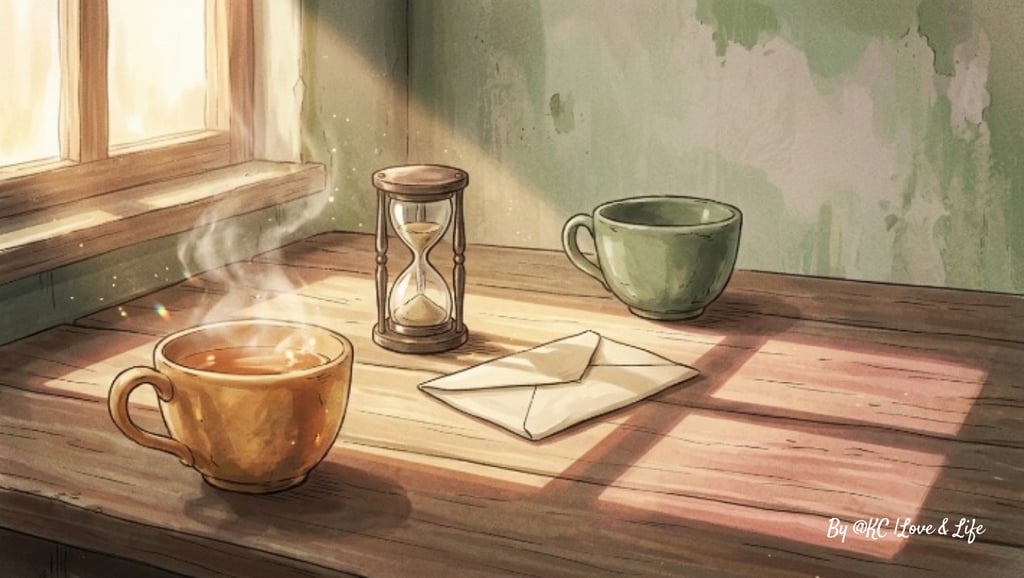

What the Other Side Actually Looks Like
Emotional independence doesn't mean you become someone who doesn't need anyone. It doesn't mean coldness, or detachment, or building walls high enough that nothing can reach you.
It means you're okay on your own. And that okayness is precisely what makes real connection possible.
It means you have a life outside the relationship that is genuinely yours — friends, work, things that light you up, a sense of yourself that doesn't depend on whether he texted back. Not as a strategy to seem less available, but because those things actually matter to you.
It means his bad day doesn't become your bad day. You can be present with his pain without absorbing it. You can care without carrying.
It means you can be alone — really alone, without filling every quiet moment with distraction or reaching for your phone — and find that the silence isn't as dangerous as you thought. That your own company is actually worth something.
It means you know, somewhere steady inside yourself, that if this relationship ended — not that you want it to, but if it did — you would survive. You would rebuild. You would still be you.
That's what I mean by emotional independence. Not the absence of love. The presence of yourself.
How You Begin to Come Back
I won't tell you this is simple. It isn't.
Breaking a pattern of emotional dependency requires sitting with discomfort that your whole nervous system is designed to avoid. It requires resisting the pull toward old habits — the checking, the reassurance-seeking, the self-erasure — in moments when those habits feel like the only thing that will make the anxiety stop.
But the place to start is smaller than you think.
It starts with rebuilding your relationship with your own company. Not as punishment, not as discipline, but as genuine curiosity. Who are you when you're not orienting yourself around someone else? What do you actually want, when wanting something for yourself feels allowed?
It starts with remembering — and then slowly reclaiming — what you've let go. The friendships that got quieter. The interests that gathered dust. The version of yourself who had a life that was entirely her own. She didn't disappear. She's just been waiting.
It starts with understanding that your happiness is not one person's to give or take. It never was. Think of it like this — you wouldn't put everything you have into a single investment and call that security. The same is true here. Your joy, your peace, your sense of being okay — they need to come from multiple places. From your own life, built deliberately, over time.
And slowly, as that life becomes fuller and more genuinely yours, something shifts.
You stop needing the text back quite so urgently. Not because you care less — but because your whole day is no longer riding on it. You stop monitoring his moods quite so vigilantly. Not because you've become indifferent — but because you've remembered that his emotional state and your emotional state are two separate things, and that distinction is a form of love, not a lack of it.
What Changes
Here's what I want you to know about the other side of this work.
When you stop coming to love from a place of need, everything about how you love changes.
You stop putting pressure on someone to be your entire source of happiness — and that pressure lifting changes the quality of what's between you. Real connection has room to breathe. It doesn't have to carry the weight of your entire sense of self.
You stop attracting people who want someone to manage. Because the version of you that is whole and grounded doesn't fit the dynamic that emotional dependency creates. You become someone different people want to be with — not someone they feel responsible for.
You can finally trust yourself. Because you've proven — to yourself, through experience — that you can be okay alone. That you can survive difficulty without someone else holding you together. That your sense of yourself doesn't depend on being chosen.
And you experience something that feels, for the first time, like real intimacy. The kind that only exists between two people who are both whole. Who are choosing each other because they want to, not because they need to. Who could survive without the other — and choose not to.
That's what love is supposed to feel like.
Not anxious. Not desperate. Not the relief of a text arriving after hours of silence.
Secure. Grounded. Chosen freely, and choosing freely in return.
This is KC — from Love & Life. 💜