
What I Finally Put Down
Holding on can feel like loyalty. Sometimes it is just fear with a better name.
I · THE ENDING
5/31/20262 min read
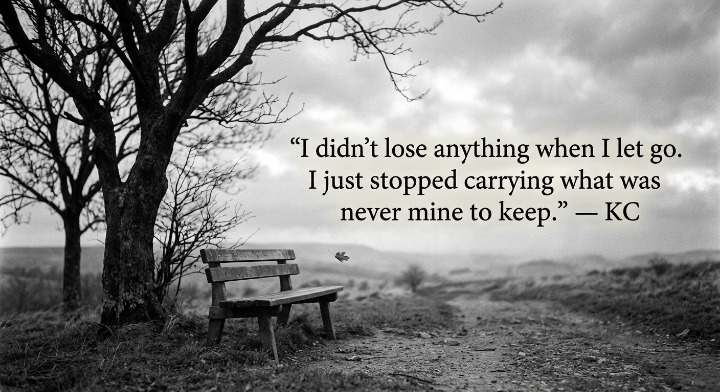
Some weight you stop noticing.
You’ve been holding it so long it has become part of the posture. Part of how you move through rooms, how you wake up, how you answer when someone asks how you are. Fine. Tired, but fine. The weight is no longer something you carry. It is simply the baseline.
It can be almost anything. A relationship that stopped being what either person needed a long time ago, held together mostly by history and the fear of what the space would feel like without it. An idea of who you were supposed to become, borrowed so early from someone else’s expectations that it passed for your own ambition. A guilt about a choice that has been paid for many times over, and that you keep returning to anyway, as if the paying were never quite complete.
None of it feels like gripping. That’s what makes it so hard to put down. You’re not holding on. You’re just used to it. It has become part of the furniture, and rearranging furniture is uncomfortable even when the old arrangement was never right.
Letting go, the real kind, almost never happens the way it’s described. It is rarely one clear moment after which the weight is gone. It’s slower and stranger than that: a long series of small moments where you notice you’ve reached for the thing out of habit, and pause, and ask whether it still needs carrying.
Sometimes the answer is yes. Not everything heavy is ready to be put down. Some things are heavy because they matter, because they’re unfinished, because there is still something alive in them.
But there is a difference between the weight of something alive and the weight of something that has been over for a while and hasn’t been told yet.
That second kind costs the most. The relationship that ended, the version of yourself that belonged to a different chapter, the dream from a life you no longer live, still carried as if it were ongoing. Still drawing energy. Still the thing you measure yourself against. A whole present, organized around something that no longer exists.
Putting something like that down doesn’t always feel like relief at first. Often it feels like disorientation, like reaching for something that was always there and finding empty air. Familiar weight has its own comfort, even when it hurts.
What comes after isn’t happiness, exactly. It’s closer to room. Space that was always being spent on managing the weight, suddenly free for something else.
I don’t know what anyone else is carrying, and I’m wary of anyone who claims to. I only know what it costs to keep holding a thing past its ending.
You don’t have to carry everything that happened to you.
Some of it has already ended. It’s just waiting for you to notice.
This is KC — from Love & Life. 💜