
The Unsexy Work of Keeping Love Alive
The honeymoon phase ends. The butterflies settle. And then comes the part nobody talks about — the ordinary, unglamorous, daily work of tending to something worth keeping. Here's what that actually looks like.
REAL TALKRELATIONSHIP DYNAMICS
7/20/20265 min read

Nobody posts about this part of relationships.
The honeymoon phase gets documented — the early dates, the butterflies, the intensity of new love. The milestones get celebrated. But the part in between — the long middle of a relationship, where love becomes something quieter and more ordinary — that part is mostly invisible.
Which is unfortunate. Because that part is where love is actually built.
Love Is a Feeling. A Lasting Relationship Is a Choice.
The feeling ebbs and flows. It quiets during stressful seasons, during exhaustion, during the accumulated weight of ordinary life lived alongside another person. That's not a sign something is wrong. That's just what love feels like over time — not always the intensity of the beginning, but something deeper and more durable if you tend to it.
The choice is what keeps you together on the days when the feeling is quiet.
Most people know how to fall in love. The falling is almost effortless — the nervous system does most of the work, the dopamine takes care of the rest. What's harder, and what nobody teaches you, is how to maintain love once you have it. How to keep the connection alive through the ordinary seasons that make up most of a life together.
The Difference Between Proximity and Presence
There's a version of togetherness that isn't really togetherness — two people in the same room, on separate screens, technically present but not actually connecting. It's easy to mistake physical proximity for emotional closeness. Over time, the distance between them grows in ways that feel sudden but almost never are.
Intentional time looks different. A real date — not errands run together, not dinner in front of the television, but actual time set aside to be present with each other. A conversation that goes deeper than logistics. The question that most couples stop asking after the early months: how are you — not just with work, but with us?
Couples who check in regularly catch small problems before they become large ones. The disconnection that feels like it came from nowhere almost always accumulated quietly, in all the weeks when nobody stopped to ask.

The Appreciation That Actually Lands
There's a difference between general appreciation and the kind that makes someone feel genuinely seen.
Warmth is one thing. Noticing a specific, particular, real thing — I saw you handle that without being asked, and it meant something to me — is another entirely. It says: I'm paying attention. Not to the version of you I've constructed in my mind, but to you, specifically, in this moment, doing this particular thing.
Research on long-term relationships has found consistently that the ratio of positive to negative interactions matters enormously — that couples who last have significantly more moments of genuine appreciation and connection than moments of criticism or conflict. Not because they suppress the negative, but because they actively generate the positive.
Feeling seen is one of the deepest needs in any long-term relationship. Specific appreciation — noticing the real, small, particular things — is one of the simplest ways to provide it. It costs almost nothing. And over years, it compounds.
Repair Matters More Than the Fight
Every couple argues. The variable that determines whether a relationship lasts isn't how often conflict happens — it's whether repair happens after.
Repair looks different in different relationships. Sometimes it's an apology that arrives the next morning, when the heat has passed and there's more room for honesty. Sometimes it's a hug before the conversation is fully resolved — a physical signal that says we're okay, even when this is hard. Sometimes it's returning to the difficult topic a few days later with more capacity and more grace than either of you had in the moment.
What matters is the return. The willingness to come back, to take responsibility for your part, to not let the rupture become the permanent state. Couples who repair well can survive fights that would end relationships where repair never arrives — because the fight itself is rarely the problem. It's the distance that forms when nobody comes back from it.
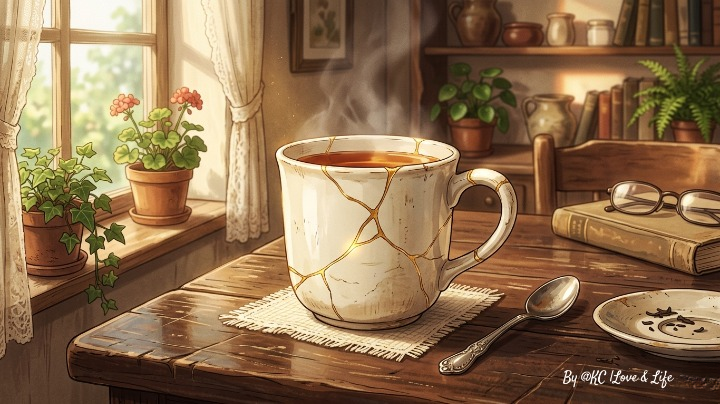

Staying Whole While Building Something Together
The healthiest long-term relationships aren't ones where two people have become each other's entire world. They're ones where two whole people have chosen to build a shared life while keeping themselves intact.
Your own friendships. Your own interests. Goals that belong to you — not to the relationship, not defined by him, just yours. Time alone that has nothing to do with the relationship and everything to do with who you are outside of it.
This isn't distance. It's what makes closeness sustainable. Two people who have given up everything outside the relationship for each other tend to create a kind of pressure that intimacy can't survive indefinitely — because the relationship is carrying more weight than any relationship is designed to hold.
You're not supposed to be everything to each other. The space between two full, separate people is where real intimacy grows — not the merging of two people who have forgotten who they are alone.
Where Love Is Actually Built
Lasting love isn't constructed in grand gestures. It's built in the ordinary moments that most people don't notice until they're gone.
The Tuesday nights where someone makes dinner when neither of you particularly wanted to cook. The text that says thinking of you for no reason in the middle of the day. The tired morning where you're both running late and one of you still makes the coffee. The choice, made quietly and without fanfare, to show up again — not because it's easy, but because the person is worth it.
Grand gestures are easy. They require intensity and occasion. Consistency is harder — and it's the real declaration. Not I love you said in a beautiful moment, but I love you demonstrated in the accumulation of small, ordinary choices made day after day.
When It Feels Like Effort
There will be seasons where tending to the relationship feels like exactly that — effort. Where you're both depleted and the connection feels thinner than usual and maintaining it requires more than you have to give that week.
That's not a sign something is wrong. That's what long love actually feels like sometimes — not always warm and close and easy, but sometimes dry and effortful and requiring more intention than it used to.
The couples who make it aren't the ones who never feel that. They're the ones who recognize it as a season, not a verdict. Who keep choosing to tend to something they've decided is worth tending, even when the tending is hard.
Love doesn't maintain itself. You water it. You tend it. You choose it — not just on the significant occasions, but on the ordinary days that make up most of a life.
And the life it builds is worth every unremarkable Tuesday it required.
This is KC — from Love & Life. 💜