
The Unsexy Thing That Makes Love Last
Everyone talks about chemistry. Nobody talks about cleanliness standards, conflict styles, and what you each do on a Sunday afternoon. But those are the things you'll actually be living with — every day, for years. Here's what to pay attention to before you're too deep in to see clearly.
REAL TALKRELATIONSHIP DYNAMICS
6/1/20265 min read
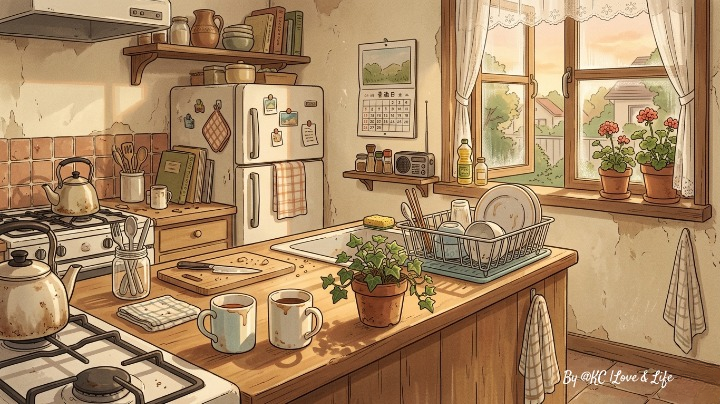

Everyone talks about passion, chemistry, spark.
Nobody talks about the boring stuff.
And the boring stuff — the daily, unglamorous, completely unsexy details of how two people actually live — is what makes or breaks a relationship long-term. Not in a dramatic moment of crisis, but slowly, quietly, in the accumulation of a thousand ordinary days that either feel like home or feel like friction.
In five years, you won't be thinking about butterflies. You'll be thinking about whether you can navigate conflict without it becoming a war. Whether you're aligned enough on money to build something together. Whether sharing a space has become a source of ease or a source of resentment you've stopped fully naming.
Passion is a feeling. Compatibility is a lifestyle. Feelings change. Lifestyle is every single day.
The Daily Texture Nobody Warns You About
Cleanliness standards seem trivial until you're three years in and fighting about dishes for the hundredth time. Year one it's endearing. Year three it's a source of daily friction. Year five it's resentment that has nothing to do with dishes anymore — but has everything to do with feeling unseen in the smallest, most constant parts of your shared life.
Sleep schedules affect more than most people expect — quality time, intimacy, how you start and end each day, the basic rhythm of being in the same space. Small incompatibilities compound quietly over years. What feels manageable at six months can feel isolating at three years.
And then there's free time — what you each do when nothing is scheduled, what a good weekend looks like, what you're drawn to when you're not performing or planning. If your idea of restoration and his have nothing in common, you'll start building separate lives inside the same relationship without either of you making a decision to do so. That's usually what people mean when they say they grew apart. They didn't grow apart. They were always apart. The chemistry just made it hard to see.
How You Process and Communicate
Communication styles are where couples most often talk past each other without understanding why.
You process by talking — you need to say it out loud to understand what you feel. He processes internally — he needs space and silence before he can speak. Without understanding this about each other, you'll feel shut out. He'll feel suffocated. Both of you will be convinced the other is the problem. Neither of you will be entirely right.
This is workable, if both people understand what's happening and make room for it. What isn't workable is when one person's way of processing gets treated as the correct way — and the other person has to adapt indefinitely.
Social needs sit in the same territory. If you need quiet to recover and he needs people to feel alive — or the reverse — it's manageable, but only if both people genuinely respect what the other needs. Not tolerate it with low-level resentment. Respect it. If he makes you feel guilty for needing alone time, or you make him feel boring for wanting to stay in, that's not a social preference difference. That's a boundary problem wearing the costume of one.
And then conflict — because conflict is inevitable, and how you each move through it matters more than almost anything else on this list. The question isn't whether you'll disagree. It's whether you can navigate disagreement without one person shutting down completely or one person escalating until something breaks. If you can't find a way through conflict together, chemistry alone will not hold the relationship. It will just make the fights more intense.

Whether You're Building the Same Life
Money habits are where most couples eventually collide — not because money itself is the issue, but because money is how values become visible. You save, he spends. You budget, he doesn't think about it. This isn't a personality quirk. It's a fundamental difference in how you each see security, the future, and what matters. You need to be genuinely aligned, or at minimum both willing to compromise. If one person refuses to engage with the conversation at all, that's not a money issue. That's a partnership issue.
Life pace shows up more slowly, but it compounds. Year one you feel like you balance each other. Year three you're frustrated he won't move faster, or exhausted that you can't keep up with him. Two people moving at fundamentally different speeds toward fundamentally different versions of their lives will eventually stop moving together — not because anything went wrong, but because the direction was always different.
Some incompatibilities are workable if both people are genuinely willing — cleanliness, social needs, sleep schedules, free time. These require ongoing compromise, not a one-time conversation. But they're survivable, if both people actually show up for it.
Some aren't workable regardless of willingness. Money, if neither person will move. Children, if one wants them and one doesn't. Values so different they shape how you see the world and every major decision within it.
The distinction isn't the category. It's whether both people are genuinely willing. One person compromising indefinitely while the other refuses to adjust isn't compatibility. It's one person slowly disappearing into someone else's life.
When to Ask — and What You're Actually Looking For
These questions don't belong on a first date. But they belong somewhere around three to six months in — before you're deeply attached, before finances are entangled, before leaving costs significantly more than it does now.
How do you handle conflict when you're really upset? What's your relationship with money — do you save, do you spend, do you think about the future? What does a good weekend look like to you? How much alone time do you need to feel like yourself?
They're not exciting questions. But a man who is serious about building something real will engage with them seriously. And a man who deflects, gets defensive, or makes you feel shallow for asking — is telling you something important about how he handles the things that actually matter.
You can have undeniable chemistry with someone who drives you to quiet, slow frustration with their mess, their spending, their shutdown in conflict. The chemistry will be entirely real. And you will still be miserable in five years.
Passion matters. It's part of what makes a relationship worth having. But passion without compatibility is just a very intense beginning with a painful ending.
You need both. And knowing what to look for — before the bond has made everything feel inevitable — is the difference between choosing and simply staying.
This is KC — from Love & Life. 💜


If you want to understand why compatibility is so hard to assess clearly when you're attached — and what your brain is actually doing when chemistry makes everything feel more certain than it is — it starts here.
→ Read the free guide: It's Not You. It's Your Brain.