
Love Without Expectations: Why Giving Freely Transforms Everything
Have you ever caught yourself keeping score in love? Counting the hours you've given, the sacrifices you've made, the effort you've poured in - and feeling that sharp sting when it doesn't come back to you the same way? If you're here, I want you to know: I've been there too. I've felt that imbalance, that quiet resentment that creeps in when love starts to feel like a transaction. In this heartfelt exploration, we'll uncover why expectations quietly poison our relationships, how to break free from the scorecard mentality, and the paradox that changes everything: when you stop expecting reciprocation, you often receive more love than you ever imagined. This is for anyone ready to love freely, give without keeping score, and discover the peace that comes from letting go of what you think you're owed.
LOVE LESSONS 📚
2/27/2026
The Gift That Changed Everything
My dear friend, let me tell you about a moment that stopped me in my tracks.
A few years ago, I spent weeks searching for the perfect birthday gift for someone I loved. I visited seven different stores, stayed up late researching, and finally found something I knew would be meaningful. I could already picture their face lighting up, their arms wrapping around me in gratitude.
When I gave it to them, they smiled politely, said "thanks," and set it aside.
That was it.
I stood there feeling... hollow. Foolish. And then came the thought I didn't want to admit: "After everything I did, this is all I get?"
Maybe you know this feeling. Maybe you've moved across the country for someone, only to find they're always too busy to spend time with you. Maybe you've rearranged your entire life to support their dreams, while your own quietly collect dust. Maybe you've given and given and given, and the scorecard in your head keeps screaming that things are deeply, painfully unfair.
Here's what I didn't understand then: The moment I started counting, I stopped loving freely. The moment I expected a certain reaction, I turned a gift into a contract.
And love? Real love doesn't work on contracts.
In my earlier relationships, I used to prioritize my partner above everything - sometimes even above my job, my friendships, my own needs. I thought that's what love required. And when that dedication wasn't mirrored back to me, I felt an unease that I couldn't quite name. Like there was an invisible scale between us, and it was tipping dangerously to one side.
The truth I've learned - sometimes the hard way - is that this sense of "unfairness" in love is one of the most common traps we fall into. Especially when we're younger and still learning what love actually means beyond the fairy tales and movies.
Today, I want to have an honest conversation with you about expectations, unconditional giving, and the freedom that comes when we stop treating love like a transaction.
When Love Becomes a Ledger
There's a concept from economics that perfectly captures what happens in many relationships: transactions.
When you buy something at a store, you exchange money for an item. Both sides get what they agreed to. Fair. Balanced. Complete.
When you work, you trade your time and skills for money. An agreement. An exchange. A transaction.
But here's the question that changes everything: Should we apply this same transactional thinking to love?
I've noticed - in my own relationships and in countless conversations with others - that we unconsciously bring this mindset into our most intimate connections. We start keeping score:
"I drove to see them three times this month, but they've only come to me once."
"I cooked dinner four nights in a row, but they haven't even offered to help with dishes."
"I remembered their friend's name, but they can't even remember my sister's birthday."
And suddenly, love becomes a ledger. A balance sheet where every act of care is recorded, calculated, and measured against what we receive in return.
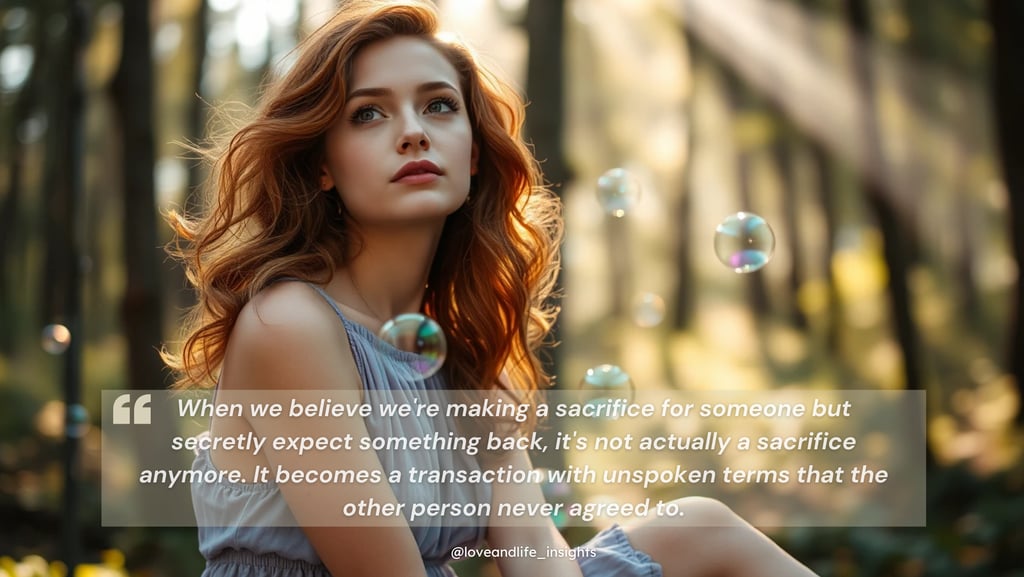
Let me be clear about something: When we believe we're making a sacrifice for someone but secretly expect something back, it's not actually a sacrifice anymore. It becomes a transaction with unspoken terms that the other person never agreed to.
The Hidden Contract and Its Cost
The mindset of "I do this for you, so you must do that for me" isn't unconditional love. It's conditional exchange. And the painful part? We often don't realize we're doing it.
We think we're being generous, but underneath, there's a quiet expectation: If I'm this thoughtful, they'll be equally thoughtful. If I make this sacrifice, they'll appreciate me more.
And when they don't meet those unspoken expectations - expectations they never even knew existed - we feel betrayed. Taken for granted. Used.
But here's what I've learned to ask myself: Whose fault is it when someone doesn't live up to expectations they never agreed to?
This transactional mindset creates exhaustion. I remember doing something thoughtful for a partner and then spending days unconsciously watching for their response. That constant vigilance is draining. It steals the joy from the very acts of love we're performing.
And here's the deeper truth: when we're focused on what we're getting back, we're no longer in control of our own peace. We've handed them the remote control to our emotional well-being. And that's a terrible place to be.
The Love That Asks for Nothing
Let me share something that completely shifted my perspective.
Think about the love your parents have for you. Or if your relationship with your parents is complicated, think about any parent you've witnessed caring for their child.
When parents make sacrifices for their children, they rarely expect anything in return.
A mother wakes up at 3 AM to comfort a crying baby - not because she expects that baby to one day wake up at 3 AM for her. A father works long hours to provide for his family - not because he's keeping a ledger of what his children will owe him later.
Their love isn't conditional on how much their children love them back. It's not based on receiving equal effort or perfectly balanced reciprocation. It's not even dependent on whether their children will grow up to be grateful.
They love because they love. That's it.
Now, I know what you might be thinking: "But KC, romantic relationships are different from parent-child relationships."
You're right. They are different. But the principle of unconditional giving - the freedom that comes from loving without keeping score - applies to all forms of love.
What if we could bring even a fraction of that unconditional mindset into our romantic relationships? What if we could give freely, not because we expect a specific return, but because the act of giving itself brings us joy?
The Question That Changes Everything

Here's what I started asking myself: Am I doing this because I genuinely want to, or because I want something in return?
That question became my compass. And it revealed some uncomfortable truths.
Sometimes, I was cooking dinner not because I enjoyed doing something nice, but because I wanted to be seen as thoughtful. I was giving gifts not purely for the joy of giving, but to secure affection and appreciation. I was making time not because I wanted to connect, but because I feared what would happen if I didn't.
When our giving has strings attached - even invisible ones - it's no longer a gift. It's an investment we're expecting a return on.
And investments in love? They rarely pay dividends the way we hope they will.
The Shift That Set Me Free
The transformation in my relationships didn't happen overnight. It was gradual, sometimes painful, and required me to confront some deeply ingrained patterns.
But here's what changed everything: I decided to focus only on what I could control.
If I wanted to spend time with someone, I made time for them - because I wanted to, not because I needed them to reciprocate with equal hours.
If I wanted to do something kind for them, I did it - for my own joy in giving, not with a mental checklist of what I should receive back.
If I wanted to support their dreams, I offered support - because it genuinely brought me fulfillment, not because I was building a case for them to support mine equally.
This shift relieved an enormous emotional burden I didn't even know I was carrying.
Suddenly, I wasn't constantly disappointed. I wasn't perpetually waiting for the other shoe to drop, for the moment when my partner would fail to meet my unspoken expectations. I wasn't anxiously monitoring their every response to see if I was getting "enough" in return.
Instead, I found control over my own sense of joy and peace. My emotional well-being was no longer hostage to someone else's actions.
The Early Relationship Magic
Think back to the beginning of a relationship - any relationship. Remember how you felt?
Maybe you drove three hours just to see them for dinner. Maybe you stayed up all night talking, even though you had work the next morning. Maybe you went out of your way to surprise them, just to see their smile.
And in those early days, the happiness came from the act itself, not from their reaction.
You weren't calculating whether they drove three hours for you. You weren't keeping track of who stayed up late more often. You weren't measuring their appreciation against your effort.
You were just... loving. Freely. Openly. Without expectation.
But something happens as relationships evolve. That selfless mindset often diminishes. We become more comfortable, yes. But we also become more calculating. We start forming expectations. We begin to feel entitled to reciprocation.
And the magic starts to fade.
What if we could reclaim that early relationship energy? Not the butterflies and nervousness, but the freedom of giving without measuring?
What if, instead of love becoming more conditional over time, it became even more unconditional?
Joy in the Giving Itself
Here's what I've discovered: When I act purely from a place of wanting to, rather than expecting something in return, the act itself becomes the reward.
Cooking for someone I love brings me joy - watching them enjoy the meal is a bonus, not the requirement.
Making time to listen to their day brings me peace - their gratitude is lovely, but my fulfillment doesn't depend on it.
Supporting their goals makes me feel connected to something larger than myself - whether they succeed or fail, whether they thank me or not, I've honored what I value: being a source of encouragement.
The reward is in the alignment with my own values, not in the response of another person.
This isn't about being a doormat or allowing yourself to be taken advantage of. We'll talk about that important distinction in a moment.
This is about freeing yourself from the prison of expectation. About reclaiming your emotional sovereignty. About loving from a place of fullness rather than from a place of keeping score.
But What About Balance?
I can almost hear the question forming in your mind right now: "KC, this all sounds beautiful. But what if I'm the only one giving? What if they just take and take and never reciprocate? Won't I be taken advantage of?"
This is a valid and important concern. And I want to address it head-on, because there's a crucial distinction we need to make here.
Loving without expectations is not the same as accepting a one-sided relationship. Giving freely is not the same as being a doormat. Unconditional love is not the same as unconditional tolerance of mistreatment.
Let me explain the difference.
The Natural Flow of Healthy Relationships
When you love someone without keeping score, you're not promising to give endlessly while receiving nothing. You're simply releasing yourself from the anxiety of measuring and monitoring every exchange.
In a healthy relationship, reciprocation happens naturally - not because it's demanded, but because it's felt.
Think about it this way: When someone genuinely cares about you, they want to give back. Not because they owe you, but because making you happy brings them joy. Not because you've created an unspoken contract, but because generosity begets generosity.
The key difference is this: You're not calculating whether things are "fair," but you are noticing whether there's natural flow in both directions.
There's a world of difference between these two scenarios:
Scenario A: You give freely, without expectation. Your partner notices, appreciates, and naturally wants to care for you in return. Sometimes you give more, sometimes they give more, but there's an organic rhythm of mutual care. You're not keeping score, but if you looked back, you'd see a pattern of reciprocity.
Scenario B: You give freely, without expectation. Your partner takes everything you offer but never initiates care, never considers your needs, never shows interest in your well-being. Months pass and you realize the flow is entirely one-directional - not because of occasional imbalance, but because they're simply not invested.
In Scenario A, releasing expectations creates freedom and deepens love.
In Scenario B, you're not in a relationship - you're in a one-person performance.
Trusting Your Feelings
Here's the beautiful paradox: When you give without expectation, you become more attuned to whether the relationship is truly mutual - not less.
When you're genuinely giving without expectation, you'll know when a relationship isn't working - not because you're keeping score, but because your feelings will tell you. When your care is consistently met with indifference, when you're perpetually bending while they remain rigid, your affection will naturally begin to fade.
And that's healthy. You can see the situation clearly without the fog of "But I've invested so much!" You can simply recognize: This relationship doesn't nourish me.
And when you reach that point, you can walk away without regret. Not bitter, but peaceful in the knowledge that you loved sincerely and that it simply wasn't reciprocated. You're free to direct that love elsewhere - toward someone who will meet you with equal care.
The Paradox of Pressure-Free Love
Now, let me share something that might surprise you - something I've witnessed over and over in my own relationships and in countless conversations with others.
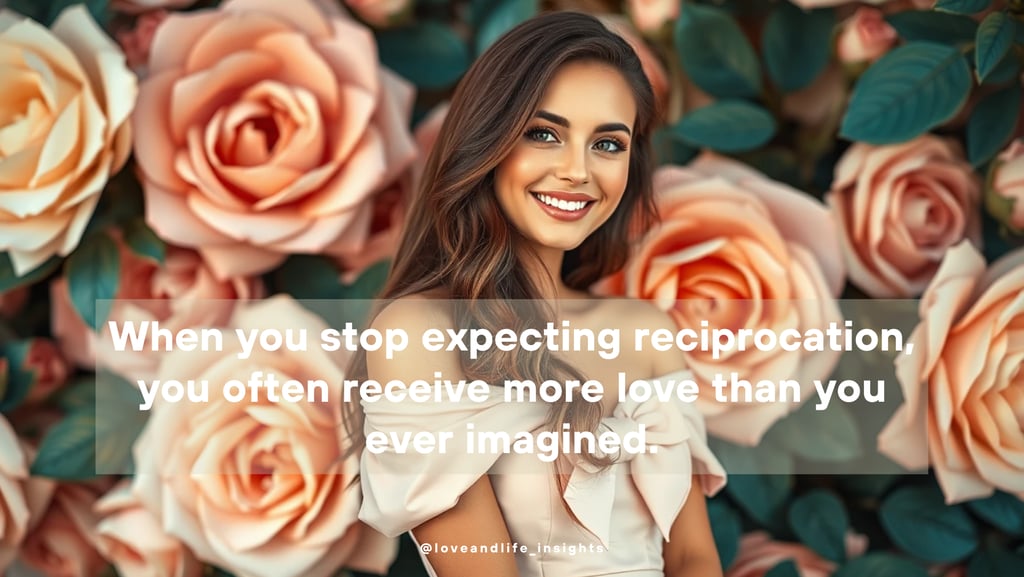
When you stop expecting reciprocation, you often receive more love than you ever imagined.
I know it sounds counterintuitive. It feels like it should work the opposite way - like if you don't demand certain things, you won't get them. But that's not how human hearts work.

3 Actions You Can Take Today
Understanding these concepts intellectually is one thing. Living them is another. So let's get practical. Here are three specific actions you can take right now to begin shifting from expectation-based love to unconditional giving.
1. The Expectation Audit
Take out a piece of paper or open a note on your phone. At the top, write: "What I'm secretly expecting in return."
Now, think about the last few things you did for your partner - or for anyone you're in relationship with. For each action, ask yourself honestly:
Was I doing this purely because I wanted to, or was there an expectation attached?
Write down whatever comes up, without judgment:
"I expected them to thank me enthusiastically"
"I expected them to remember this later and reciprocate"
"I expected this to make them appreciate me more"
"I expected this to prove that I'm a good partner"
"I expected them to feel guilty if they didn't respond a certain way"
This audit isn't about shame. It's about awareness.
Once you can see your hidden expectations clearly, you can start to release them. You can catch yourself in the moment, before you act, and ask: "Am I about to do this with strings attached? If so, do I want to proceed anyway, or do I need to adjust my motivation first?"
Sometimes, you'll realize you genuinely want to do something even without expectation. Other times, you'll recognize that you're about to do something resentfully, as a manipulation - and you can choose differently.
2. The Joy Test
For the next week, practice this simple exercise:
Do one thing for your partner (or anyone you're practicing this with) without announcing it, without seeking recognition, and without any expectation of response.
It could be something small:
Doing a chore they usually handle, without mentioning it
Leaving a note of appreciation where they'll find it, without waiting around to see their reaction
Taking care of something that's been stressing them out, and not telling them until later (or at all)
The key is to notice: Can you find joy in the act itself, independent of their response?
Pay attention to what comes up:
Do you feel anxious if they don't notice or comment?
Do you feel tempted to point out what you did?
Can you feel satisfaction simply from knowing you did something kind?
This exercise trains you to locate the reward in the giving itself, not in the receiving of recognition.
3. The Feeling Flow Practice
Here's something I learned that transformed my relationships: Let your feelings guide at least one action this week.
Ask yourself: If I weren't worried about fairness, reciprocation, or whether I'm giving "too much" - what would I genuinely want to do right now?
Maybe you'd want to:
Text them just to say you're thinking of them
Plan a surprise date because planning it sounds fun to you
Support them through something difficult, even though they haven't supported you lately
Make their favorite meal because you enjoy cooking for them
Do that thing. Let your feelings flow freely.
And then - and this is crucial - observe what happens inside you afterward.
Does it feel light? Joyful? Aligned with who you want to be?
Or does it feel heavy? Resentful? Like you're building a case for what they owe you?
If it's the latter, that's valuable information. It means you're not yet giving from a place of genuine desire - there are still expectations lurking underneath.
And that's okay. This is a practice, not a perfection. Each time you notice, you're building awareness. And awareness is the first step toward freedom.
Seize Every Opportunity to Love
My dear friend, I want to share something that took me far too long to learn.
Love isn't always easy. And the older we get, the more complicated it seems to become.
When we're young, feelings are intense and straightforward. We love with our whole hearts, without calculation, without the weight of past disappointments and learned caution.
But as we grow older, we become more guarded. We've been hurt. We've given too much and received too little. We've learned to protect ourselves, to hold back, to measure and monitor.
And in that self-protection, we often lose something precious: the ability to love freely.
Here's what I wish someone had told me years ago: Every moment that you feel love for someone is a gift - not to them, but to you.
The capacity to love, to care deeply, to want someone else's happiness - that capacity is what makes us fully human. It's what brings meaning and richness to our lives.
And it doesn't last forever.
While Feelings Remain, Let Them Flow
Feelings change. They evolve. They fade. Sometimes slowly, sometimes suddenly.
There will come a time when you don't feel for someone the way you do now. That's not pessimism - it's reality. All things in life are impermanent, including the intensity of our emotions.
So while you still feel it - while love is alive in your heart - why not let it flow?
Why not express it, act on it, give it freely? Why hold it back out of fear that you won't receive equal return? Why ration your love as if it's a scarce resource that must be carefully budgeted?
Love isn't diminished by giving. It's actually amplified.
The more you express it, the more you feel it. The more you act from it, the more alive you become.
The Only Regret That Matters
I've talked to many people who've loved and lost. And do you know what the universal regret is?
It's not: "I gave too much."
It's not: "I loved too freely."
It's not: "I should have kept better score."
It's always: "I held back when I could have been more open. I played it safe when I could have been more vulnerable. I protected myself when I could have loved more fully."
When a relationship ends, the people who gave freely, who loved without constant calculation, who expressed their care openly - they walk away with peace. They know they showed up fully. They have no lingering "what ifs" about whether they should have tried harder or loved better.
But the people who held back, who measured every action against expected return, who loved conditionally - they walk away with regret. They wonder if things might have been different if they'd been less guarded. They realize too late that the very self-protection they thought was wise was actually what prevented the depth they craved.
Love and Business Are Not the Same
Here's a simple truth that can transform everything: Love and business are not the same.
In business, transactions make sense. Fair exchange is the foundation. You provide value, you receive payment. Clear, balanced, appropriate.
But when we import that transactional mindset into love, we kill the very thing we're trying to protect.
Love thrives in freedom. It flourishes when given without strings. It deepens when we release our grip on outcomes and simply show up with open hearts.
This doesn't make us foolish. It makes us brave.
It takes far more courage to love without guarantees than to love with contracts. It takes far more strength to give freely than to give with expectations.
And it creates far more genuine connection.
The Relationship You Truly Want
Think about the kind of relationship you actually want to be in.
Do you want one where you're constantly monitoring whether things are fair? Where every act of care comes with the weight of expectation? Where you're both walking on eggshells, anxious about whether you're giving and receiving "enough"?
Or do you want one where you both feel free? Where care flows naturally, without pressure? Where you can give generously without anxiety, and receive graciously without obligation?
The second kind of relationship only becomes possible when someone decides to love without keeping score.
And that someone can be you. Today. Right now.
You don't need your partner to change first. You don't need to wait for them to prove they're worthy of your unconditional care. You don't need permission or reciprocity before you can choose to love freely.
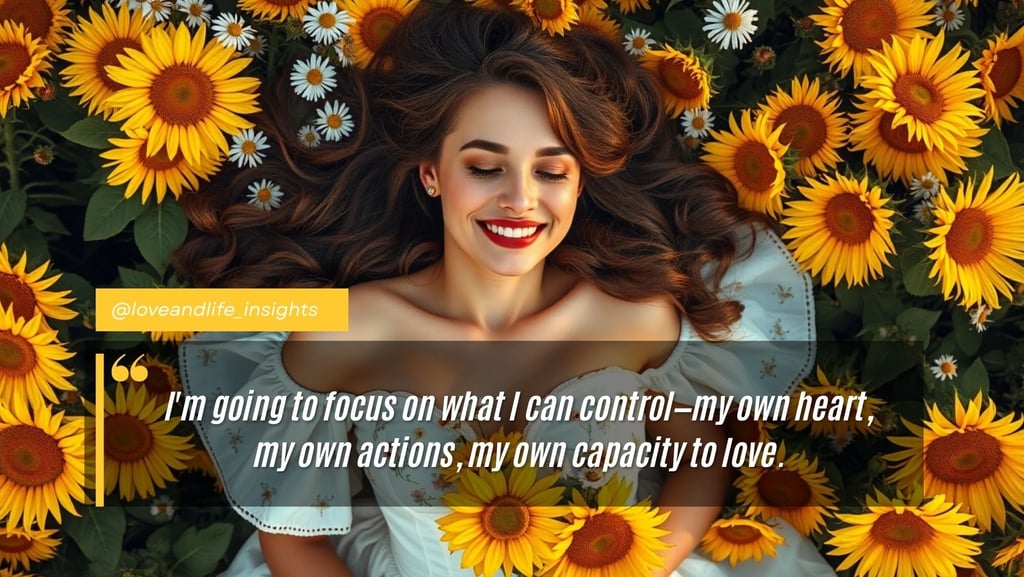
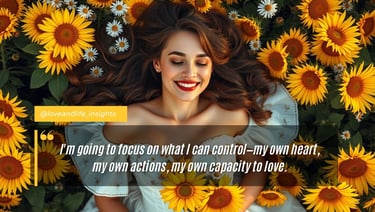
You can simply decide: I'm going to focus on what I can control - my own heart, my own actions, my own capacity to love.
And in that decision, you reclaim your power. You step out of the victim role of "They're not giving me enough" and into the empowered role of "I choose how I want to show up in love."
Why Pressure Backfires
Think about how it feels when someone gives you something but you can sense they're expecting a particular response. They buy you a gift but watch your face, measuring your reaction. They do you a favor, but there's an invisible string attached.
That pressure is suffocating. It turns what could have been beautiful into an obligation. It makes you feel guilty rather than grateful, anxious rather than loved. Paradoxically, it makes you want to give less.
Now contrast that with freely given love. When someone does something kind simply because they wanted to - when they support you without any hint that you now owe them - that kind of giving opens your heart.
And here's what happens: You naturally want to give back. Not because you have to, but because that's what love does. It flows. It circulates. It expands. When someone makes you feel comfortable rather than pressured, you find yourself wanting to care for them in return - often in ways that far exceed what they initially gave you.
Two People Fostering Peace and Love
This is what I believe the essence of a relationship should be: two people creating peace and love for each other.
Not two people keeping score.
Not two people negotiating transactions.
Not two people anxiously monitoring whether things are "fair."
But two people who have decided that making the other person feel safe, valued, and loved is its own reward.
When both people approach the relationship this way - when both are focused on giving rather than receiving - something magical happens.
You're both giving freely, without expectation. And you're both receiving abundantly, not because you demanded it, but because love naturally reciprocates when it's given without strings attached.
The pressure disappears. The anxiety dissolves. The resentment never forms.
And what's left is something pure: two people who genuinely enjoy caring for each other, not out of obligation, but out of authentic desire.
The Natural Reciprocation
I've experienced this transformation in my own relationships, and it's nothing short of profound.
When I stopped tracking whether my partner was doing "enough" and focused only on what I wanted to give, something shifted in the dynamic between us.
I stopped giving off that subtle energy of expectation - the invisible pressure that had been there even when I didn't realize it.
And in that space of freedom, my partner began to give more. Not because I demanded it, not because they felt guilty, but because the absence of pressure created room for their authentic generosity to emerge.
They started thinking of ways to surprise me. They initiated care and consideration. They showed up in ways that exceeded anything I could have asked for - because I wasn't asking. I was just loving.
This is the paradox: When you release your grip on what you think you're owed, you often receive more than you ever demanded.
Your Next Chapter Starts Here
My dear friend, if you've made it this far, I want you to know something: The fact that you're still reading means you're ready for this shift.
You wouldn't be here if some part of you wasn't tired of the scorekeeping, the disappointment, the constant anxiety about whether you're receiving enough in return for what you're giving.
You're here because you sense there's a different way. A freer way. A way that honors both your capacity to love and your need to protect your own well-being.
That way is this: Give what you genuinely want to give, without expectation. Let your feelings guide you while they're still alive. Focus on the joy of giving rather than the hope of receiving. And trust that in a healthy relationship, that kind of love naturally creates the reciprocity you crave - not through demand, but through genuine connection.
This isn't about being perfect. You'll slip back into old patterns sometimes. You'll catch yourself keeping score, monitoring, expecting. That's human.
But each time you notice, you have a choice. You can continue in that pattern, or you can pause, breathe, and ask yourself: "What would I do right now if I truly didn't expect anything in return?"
And then do that.
Over time, this practice will transform not just your relationship, but your entire experience of love. You'll discover a freedom you didn't know was possible. A lightness. A joy that comes from alignment with your deepest values rather than from someone else's validation.
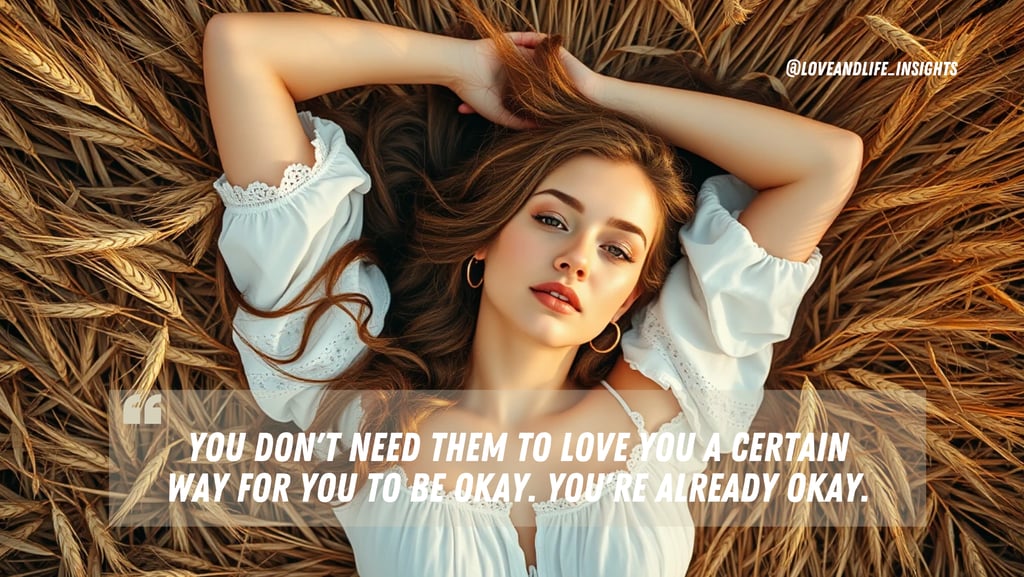
You'll learn that you don't need them to love you a certain way for you to be okay. You're already okay. Their love is a beautiful addition to your life, not the foundation of your peace.
And ironically, that's when they're most likely to love you freely in return.
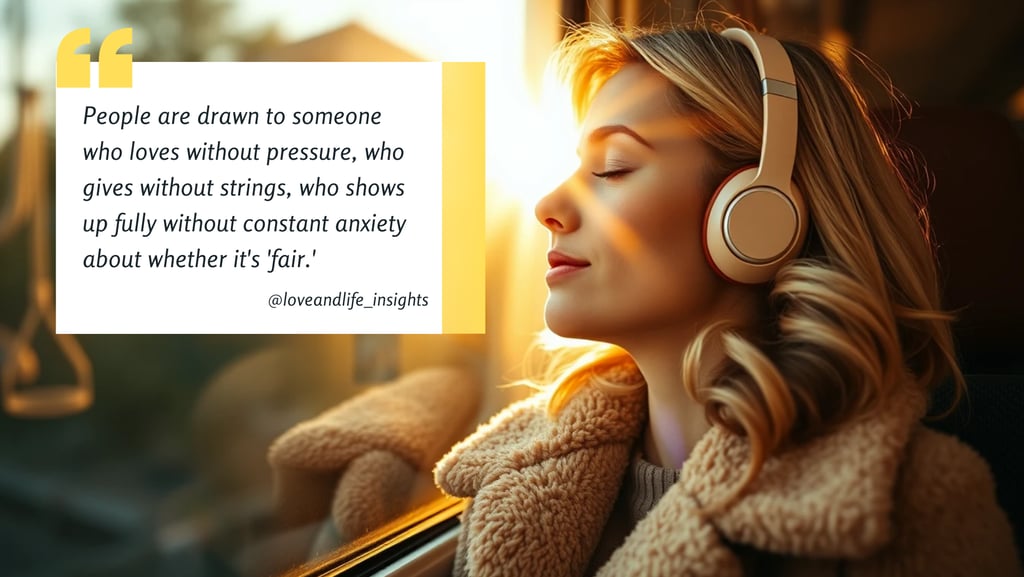
Because people are drawn to freedom. They're drawn to someone who loves without pressure, who gives without strings, who shows up fully without constant anxiety about whether it's "fair."
That person is magnetic. That person is rare. That person is you, when you choose to release the ledger and simply love.
So here's my invitation: Seize every opportunity to love while love still lives in your heart.
Don't overcomplicate it. Don't turn it into a transaction. Don't ration your care as if it's a finite resource that must be carefully distributed only when proper payment is guaranteed.
Love freely. Give generously. Let your feelings flow while they're still present.
And if that love isn't reciprocated - if the relationship proves to be one-sided despite your open heart - you'll know. Your feelings will tell you. And you'll be able to walk away with grace, without bitterness, knowing you showed up fully.
But at least you will have loved. Truly, freely, completely.
And that matters more than you might realize right now.
This is KC - from Love & Life. ✨
Thank you for taking this journey with me today. If this resonated with you, I hope you'll carry one simple practice forward: the next time you want to do something for someone you love, ask yourself if you can do it purely for the joy of giving - no expectations, no strings, just love. See what shifts when you try.
You are stronger and more capable of unconditional love than you know. Keep loving freely. 💝
You've just taken the first step - recognizing the difference between loving freely and loving with a hidden scorecard. But shifting that pattern in real life? That takes practice, reflection, and the right tools.
The Love & Life Resource Library is filled with free guides to help you build exactly that - healthier patterns, stronger boundaries, and a deeper understanding of how you give and receive love.
Access the Free Resource Library →
✨ Because the most powerful thing you can do for your relationships is to keep doing the inner work - just like you're doing right now.