
Is Your Partner Controlling You? Recognizing the Signs and Reclaiming Your Freedom
Do you feel like you're constantly walking on eggshells? Do you find yourself explaining and justifying even the smallest decisions? Do you feel monitored, questioned, or controlled? If you answered yes to any of these questions, this article is for you. Today, we're talking about recognizing controlling behavior in relationships - what it looks like, why it happens, and most importantly, what you need to do to protect yourself and reclaim your freedom.
GREEN FLAGS / RED FLAGS 🚩THE SELF-LOVE SERIES 💖
12/15/2025
If you're reading this, there's a chance you already know something isn't right. Maybe you've been making excuses for his behavior. Maybe you've been telling yourself it's just because he cares so much. Maybe you've been wondering if you're overreacting, being too sensitive, asking for too much.
Let me ask you something: Do you feel like you're constantly walking on eggshells? Do you find yourself explaining and justifying even the smallest decisions? Do you feel monitored, questioned, or controlled?
If you answered yes to any of these questions, I need you to keep reading. Because today, we're talking about something serious - controlling behavior in relationships. And if you're experiencing it, you need to understand what's happening, why it's happening, and most importantly, what you need to do about it.
This isn't about small disagreements or normal relationship friction. This is about recognizing when someone's behavior is crossing the line from caring into controlling - and understanding that your well-being, your freedom, and your safety matter more than preserving a relationship that's suffocating you.

Understanding Why He Controls (But Why That Doesn't Excuse It)
Before we dive into the signs, I want to address something important: control is not an inherent personality trait. It's a manifestation of deeper issues.
Understanding this doesn't excuse the behavior - but it does help us see the full picture.
The Root of Controlling Behavior
Control often stems from unresolved inner pain and past trauma. Your partner may have experienced deception or betrayal in previous relationships. He may have grown up in an environment where he felt powerless or unsafe. He may have been manipulated or hurt during his formative years, never receiving the secure, nurturing love that builds healthy attachment.
These experiences can create deep-seated insecurities and fears. The controlling behavior becomes his way of trying to manage those fears - by controlling you, he believes he can prevent the pain he experienced before.
I'm sharing this not to make you feel sorry for him, but to help you understand what you're dealing with. Because understanding the root doesn't mean you're responsible for fixing it.
Empathy Doesn't Mean Acceptance
Here's what's crucial: while this context helps us empathize with where his behavior comes from, it absolutely does not justify what he's doing to you.
His past pain doesn't give him the right to control your present. His trauma doesn't excuse him from treating you like a person with autonomy and rights. His insecurities don't justify him monitoring, restricting, or dominating you.
You can feel compassion for what he's been through while still recognizing that his behavior toward you is unacceptable. These two things can coexist. And more importantly, his healing is his responsibility, not yours.
You are not his therapist. You are not his rehabilitation project. You are not responsible for managing his insecurities at the expense of your own freedom and well-being.
Understanding why someone behaves a certain way is valuable. But it should never trap you into staying in a situation that's harming you.



Three Clear Signs You're in a Controlling Relationship
Now let's get specific. Here are three key indicators that you're dealing with controlling behavior - not just a partner who cares about you, but one who's attempting to control you.
1. He Dominates Your Choices
A controlling partner will try to dictate various aspects of your life: how you spend your time, what you wear, whom you interact with, where you go, what you do.
At first, it might seem like care. "I don't think you should wear that - it's too revealing." "I don't like it when you hang out with that friend - she's a bad influence." "Why would you want to go there without me?"
But over time, you realize it's not about caring for you. It's about restricting your personal freedom and individuality. It's about making you smaller, more manageable, easier to control.
You might find yourself:
Changing your outfit before you leave because you know he'll have something to say about it
Declining invitations from friends because it's easier than dealing with his reaction
Asking permission for things you should be free to decide on your own
Modifying your behavior, interests, or activities to avoid conflict
This isn't partnership. This is domination. And it slowly erodes your sense of self until you barely recognize the person you've become.
2. He Invades Your Privacy
You feel constantly monitored, as if you're living under surveillance.
This can manifest in many ways:
Demanding access to your phone, reading your messages, checking your call history
Insisting on knowing your social media passwords and monitoring who you interact with online
Expecting immediate responses to his messages and interrogating you if you don't reply quickly enough
Tracking your location or showing up unexpectedly to "check" on you
Going through your belongings, emails, or personal spaces without permission
You might tell yourself he's just being cautious, that he's been hurt before, that if you have nothing to hide it shouldn't matter. But here's the truth: privacy isn't about having something to hide. Privacy is a fundamental right in a healthy relationship.
Trust and surveillance cannot coexist. If he trusted you, he wouldn't need to monitor you. And the fact that he feels entitled to access every aspect of your life - that he treats your personal boundaries as obstacles to overcome rather than rights to respect - is a massive red flag.
3. You Constantly Have to Justify Yourself
You find yourself frequently explaining or defending even the most mundane actions or decisions.
"Where were you?" "Who were you with?" "Why did you take so long?" "Why didn't you answer sooner?" "What were you really doing?" "Who is that person?" "Why are you smiling at your phone?"
The questions are endless. And no answer is ever quite good enough. There's always another question, another doubt, another suspicion.
This creates an atmosphere of perpetual suspicion that erodes trust and makes you feel like you're constantly on trial. You start second-guessing yourself. You start providing explanations before he even asks. You start living your life as if you're always being judged and found wanting.
This isn't normal relationship communication. This is interrogation. And it trains you to believe that you're always doing something wrong, that you're always suspicious, that you can't be trusted - even when you've done nothing to warrant that mistrust.
The Pattern
If you're experiencing even one of these signs consistently, you're in a controlling relationship. If you're experiencing all three? You need to seriously consider your safety and well-being.
Because controlling behavior doesn't get better on its own. It escalates. What starts as "he just cares a lot" can evolve into isolation, emotional abuse, and in some cases, physical danger.
The Myth of Changing a Controlling Partner
Now let's address the belief that keeps so many women trapped in controlling relationships: the idea that your love, your patience, or your understanding can change him.
I need to be honest with you about this, even though it's hard to hear.
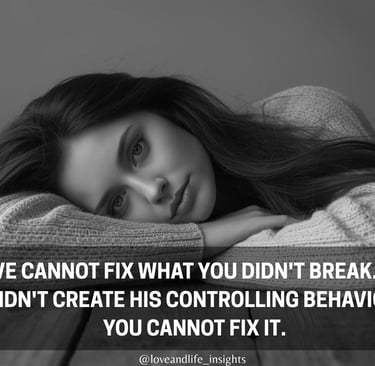
Love Cannot Fix What You Didn't Break
It's a common misconception that love or patience can transform a controlling person. The reality is far more complex - and far less hopeful.
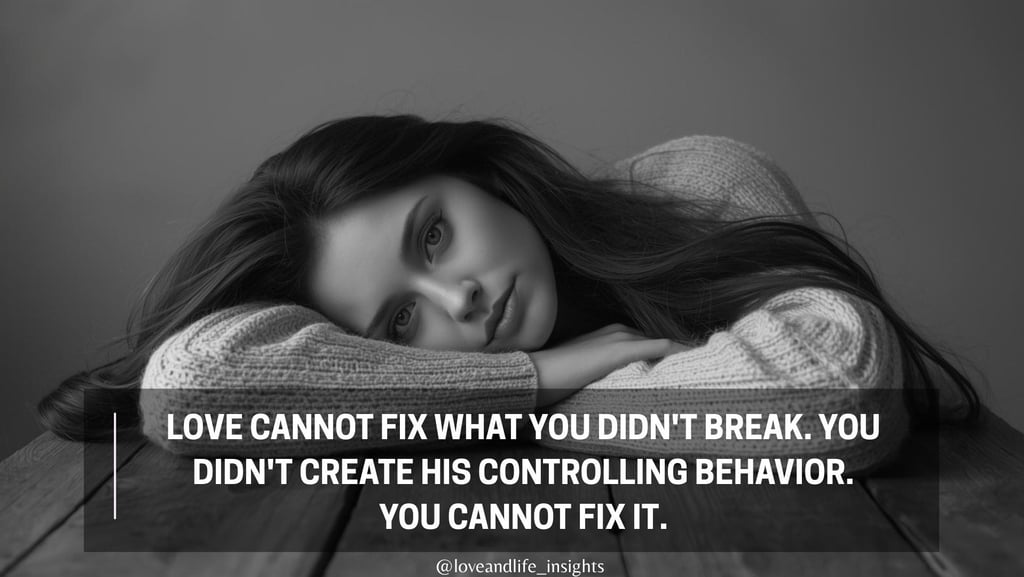
Controlling behavior is not something that changes because you love him enough, stay patient enough, or prove yourself trustworthy enough. It's deeply ingrained, rooted in long-standing insecurities, fears, and often past trauma that existed long before you came into his life.
You didn't create his controlling behavior. You cannot fix it.
Think about what you've already tried. You've probably:
Proven your loyalty over and over
Cut off friendships he was uncomfortable with
Changed your behavior to accommodate his insecurities
Explained yourself until you were exhausted
Reassured him countless times
Made yourself smaller to make him feel more secure
And has any of it worked? Has he become less controlling? Or has he simply found new things to control, new reasons to doubt you, new ways to restrict your freedom?
Staying Reinforces the Behavior
Here's something most people don't realize: remaining in the relationship, hoping for change, may actually reinforce his behavior.
Every time you accept his control, every time you comply with his unreasonable demands, every time you apologize for having basic freedoms - you're teaching him that his behavior works. That he can control you. That you'll stay no matter what he does.
I know that's not your intention. You're staying because you love him, because you believe in him, because you hope things will get better. But from his perspective - conscious or not - your staying communicates that his behavior is acceptable.
True Change Requires Recognition and Professional Help
True change can only occur when the controlling individual recognizes their issues and actively seeks professional help to address them.
Not when you point out the problem. Not when you threaten to leave. Not when you cry or plead or explain how much he's hurting you. Those things might create temporary changes - a few weeks of "good behavior" before things slide back to how they were.
Real, lasting change requires:
Him recognizing that his behavior is the problem (not your actions, not his past, not his fears - his behavior)
Him taking full responsibility for how he treats you
Him seeking professional help from a therapist who specializes in controlling behavior
Him doing consistent, long-term work to address his underlying issues
Him proving through sustained behavioral change - over months and years, not days and weeks - that he's actually different
And here's the crucial part: even if he does all of this, you are not obligated to stay and see if it works.
You are not required to sacrifice years of your life waiting to see if he can become the partner you deserve. You are not responsible for his healing journey. And you are absolutely allowed to prioritize your own well-being over his potential for change.
The Harsh Truth
Most controlling partners do not change. Not because change is impossible, but because:
They don't see their behavior as the problem
They believe you are the problem that needs to be controlled
They're not willing to do the deep, uncomfortable work required
Even when they say they'll change, they often can't sustain it without professional help
I'm not saying this to be cruel. I'm saying this so you can make decisions based on reality, not hope. So you can stop waiting for a version of him that may never materialize while your life, your freedom, and your sense of self continue to shrink.
Taking Action: Prioritizing Your Well-being
If you've recognized that you're in a controlling relationship, the most crucial step is this: prioritize your mental, emotional, and physical safety above everything else.
I know what you're thinking. "But KC, I love him." "It's complicated." "He needs me." "What if he changes?" "I've invested so much time." "I don't want to hurt him."
I hear all of that. But I need you to hear this: staying in a controlling relationship is not love. It's self-abandonment.
The Decision to Leave
While ending a relationship is never easy, it's often necessary for your personal growth, your well-being, and in many cases, your safety.
This isn't about giving up on someone you care about. This is about refusing to give up on yourself.
You cannot love him into health while sacrificing your own. You cannot fix his brokenness by breaking yourself. You cannot pour from an empty cup - and staying in this relationship is draining you dry.
How to Leave Safely and Firmly
When you decide to end the relationship, here's what you need to know:
Approach it with clarity and firmness. This is not a negotiation. This is not an invitation for him to explain why you're wrong or to promise he'll change. This is you stating a decision you've already made.
"This relationship is over. I've made my decision and it's final."
That's it. Short. Clear. Non-negotiable.
Avoid getting entangled in lengthy explanations or heated arguments. He will likely try to:
Demand reasons and justifications
Argue against your perspective
Promise to change
Turn things around to make it your fault
Guilt you into staying
Become angry or make threats
Do not engage. You do not owe him a detailed breakdown of every reason you're leaving. You do not owe him the opportunity to argue his case. You do not owe him another chance.
Do it in a way that prioritizes your safety:
If possible, have the conversation in a public place or with someone nearby
Have your important belongings already moved out
Block his access to your phone, social media, and location tracking
Tell trusted friends and family what's happening so they can support you
If you fear for your safety, contact domestic violence resources for guidance on how to leave safely
Do not meet with him alone after you've ended things, especially if he's asking to "talk things through"
Remember your goal: to extricate yourself from the situation as safely and smoothly as possible. Not to make him understand. Not to leave on good terms. Not to help him through this difficult time. Your goal is to get out and stay out.
What Happens After
After you leave, he may:
Bombard you with messages
Show up at your home or workplace
Promise he's changed
Apologize profusely
Involve mutual friends to plead his case
Alternate between being sweet and being angry
This is not evidence that you made the wrong choice. This is evidence of exactly why you needed to leave.
Stay strong. Do not respond. Do not engage. Every time you respond - even to tell him to stop- you're teaching him that if he persists long enough, you'll communicate with him.
If he won't respect your boundaries, block him. If he escalates, document everything and consider involving authorities if necessary.
You Deserve to Fly
Let me tell you something important: love should be a force that empowers and uplifts you, not one that confines or diminishes your spirit.
Real love gives you space to be yourself. Real love respects your boundaries. Real love trusts you. Real love celebrates your independence rather than trying to restrict it.
You deserve a relationship where you can thrive, grow, and express yourself freely. Where you don't have to explain yourself constantly. Where your privacy is respected. Where you're treated as an equal partner, not as someone who needs to be monitored and controlled.
Protect Your Wings
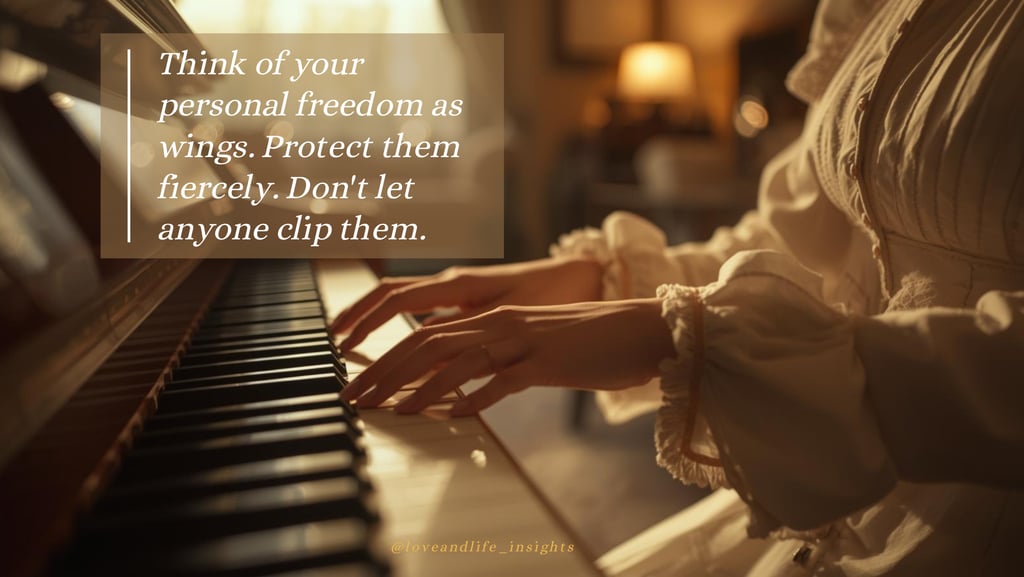
Think of your personal freedom as a pair of wings. They're yours. They're precious. They're what allow you to soar, to explore, to become everything you're meant to be.
Protect them fiercely. Don't allow anyone to clip them.
Not for love. Not out of fear. Not because he promises he'll stop. Not because you've already invested so much time. Not because leaving feels too hard.
Your wings - your freedom, your autonomy, your right to make your own choices - are not negotiable.



You're Not Alone
If you're trapped in a controlling relationship right now, please know: you are not alone.
So many women have walked this path before you. They've felt the same fear, the same guilt, the same confusion. And they've found their way out. They've rebuilt their lives. They've rediscovered who they are without someone constantly telling them who they should be.
You can too.
Reach out to trusted friends, family members, or professional support services. They can provide the emotional support and practical assistance you need during this challenging time. You don't have to figure this out alone.
You Have the Strength
Recognizing the problem is the first step toward reclaiming your life and happiness. You've already taken that step by reading this.
The next step is believing that you deserve better. Because you do. You deserve respect. You deserve trust. You deserve freedom. You deserve a love that doesn't require you to make yourself smaller.
You possess the inner strength to break free and create the healthy, fulfilling relationship you truly deserve.
That relationship might be with someone new someday. Or it might be with yourself - learning to love and value yourself so deeply that you'd never again accept treatment that diminishes you.
Either way, it starts with choosing yourself. With protecting your wings. With walking away from someone who's trying to keep you caged.
This is KC - from Love & Life. 🕊️
Stay strong. Stay safe. And remember: you were born to fly, not to live in a cage. The door is open. All you have to do is walk through it.
Safeguarding Your Heart: 10 Critical Signs of Emotional Exploitation in Relationships
Rewriting Your Love Story: A Journey of Healing and Transformation